


The House of Representatives’ version of Dalilah’s Law that would significantly impact the issuance of CDLs and the ability of driver training schools to stay in business sailed through the Transportation & Infrastructure Committee Wednesday, approved on a 35-26 party-line vote.
It was the first step for the proposal that has manifested itself in separate House and Senate versions that have some key differences.
The bill is named for Dalilah Coleman, the California girl injured in 2024 when she was five, in a collision involving a truck driven by a driver in the U.S. illegally. Dalilah suffered long-term injuries. She and her family were in the committee chambers for the hearing and vote by the House Transportation & Infrastructure committee.
Rep. David Rouzer of North Carolina, a Republican, introduced the legislation. The counterpart bill in the Senate was introduced by Sen. Jim Banks, a Republican of Indiana. Banks’ bill was introduced first and received an endorsement by President Donald Trump in this year’s State of the Union address.
The Senate bill, S. 3917, has been referred to the Senate’s Committee on Commerce, Science, and Transportation. There are no scheduled hearings or markups in the Senate as of Wednesday.
Despite the differences between the House and Senate versions, the main thrust of both pieces of legislation remains the same: to remove drivers whose legal status in the U.S. does not fall under several different approved categories.
“The open border policies of the Biden administration flooded our country with far more illegal immigrants than at any time in our country’s history,” Rouzer said in his opening remarks at the bill’s markup Wednesday. “Additionally, a lack of oversight enabled states to issue commercial driver’s licenses to these unqualified foreigners, creating an unacceptable risk to the traveling public and we are paying the price.”
English proficiency at the heart of the House bill
The key provisions in the House bill passed by the committee begin with a focus on English proficiency.
The Department of Transportation, the House bill says, will “ensure an individual may only operate a commercial motor vehicle if the individual can read and speak the English language.” What is defined as sufficiency is that the driver must be able to “converse with law enforcement officers; understand highway traffic signs and signals in the English language; respond to official inquiries; and make entries on reports and records.”
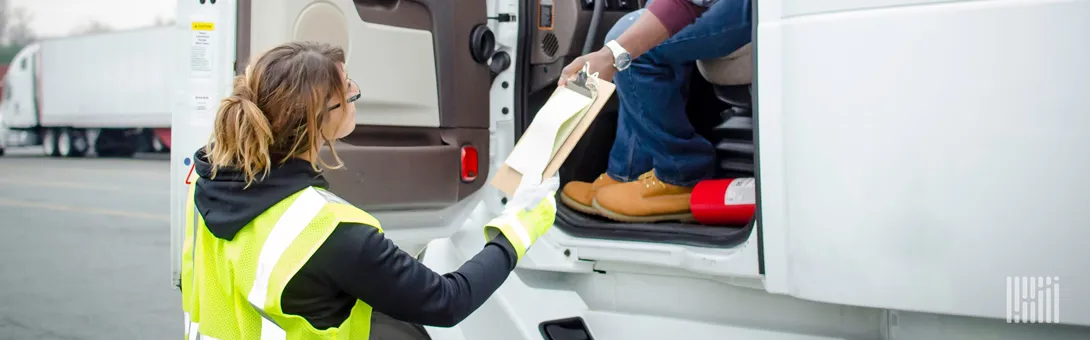
Initially, the determination of proficiency would be up to law enforcement or an inspector that is communicating with a driver. If the determination is that the driver is not English proficient, they will be taken out of service.
Criticism from the other side of the aisle
A year following the passage of the bill, the Secretary of Transportation will issue guidelines of how states will enforce the question of English proficiency.
The lead Democrat on the committee, Rick Larsen of Washington, criticized the speed at which the legislation made its way to the committee.
“We were unable to be participants in developing the language of this bill,” he said. “I do hope we get back to regular order and work together to pass a comprehensive bipartisan surface transportation bill.”
Larsen emphasized he understood the problem Dalilah’s Law was trying to solve. “Fourteen people are killed every day (in a truck crash) and it has been this way for decades, far too long,” he said.
But Larsen said there are provisions in the bill that are unnecessary. He said an English language proficiency requirement is already being implemented by the administration. “Every state and the District of Columbia is currently adhering to the administration’s enforcement guidance, and which requires commercial drivers to be placed out of service for failing English language proficiency tests,” Larsen said.
Larsen also criticized the one-year out of service requirement in the bill for drivers that were found to not be English proficient, saying it’s on the same level as “drivers who are caught driving drunk or who flee the scene of a crash.”
On the heels of a new FMCSA regulation
The House action took place two days after the implementation of a FMCSA rule that over time according to some estimates will take about 200,000 non-domiciled drivers off the road. A non-domiciled driver is defined as one that receives a CDL in a state other than where the driver resides.
That non-domiciled rule was published February 13, going into effect 30 days later. FMCSA has provided a list of FAQs on the regulation.
While the wording between the Senate and House bills is not identical, the definition of non-citizens who could still qualify for a CDL under the parallel pieces of legislation came in for criticism from Larsen. It could be interpreted to shut off any opportunity for a CDL holder who is in the U.S. under the DACA program (immigrants who were brought to the U.S. illegally as a child and still do not have legal status) or political refugees.
“This bill blocks off job opportunities for people who are in this country legally and otherwise could meet qualifications to drive commercially,” Larsen said. “That’s not a policy I can justify to the refugees in my district (from) places of conflict, like Ukraine, like Afghanistan, like Iraq, all folks who live in my district who are trying to make a life while waiting and hoping and praying that their country of origin gets to a place where they can return.”
180-day requirement not in the House bill
A key provision in the Senate bill that is not in the House version requires recertification of all CDLs 180 days after Dahlila’s law is enacted. Failure to do so would result in license revocation.
The House version also requires the Department of Transportation (DOT), 18 months after Dalilah’s law goes into effect, to issue a final rule regarding the self-certification of CDL schools. There is no parallel language in the Senate bill.
In his comments, Rouzer said “CDL mills have become back doors for unqualified drivers to receive licenses.”
“Last year, FMCSA audited and removed nearly 3,000 training providers for falsifying training data or failing to meet federal curriculum requirements,” he said. “That’s 3,000 facilities essentially putting dangerous drivers on our roads.”
The House version has limitations on what the committee, in its statement celebrating the vote, said were “shady” dispatching services. There is no parallel language in the Senate version.
The rule in the House version would now allow the DOT to register a non-domiciled dispatcher that is not in the U.S. or in Canada and Mexico, though they must be licensed in those countries.
Both versions would allow the federal government to withhold transportation funds to any state that does not comply with the law’s provisions.
In a prepared statement in support of the House committee action, Todd Spencer, president of the Owner-Operator Independent Drivers Association, had particular praise for the CDL training school provisions.
“By strengthening federal oversight and certification requirements for CDL training providers, this bill takes direct aim at the ‘CDL mill’ problem that has allowed unqualified drivers onto our roads,” he said in the statement.